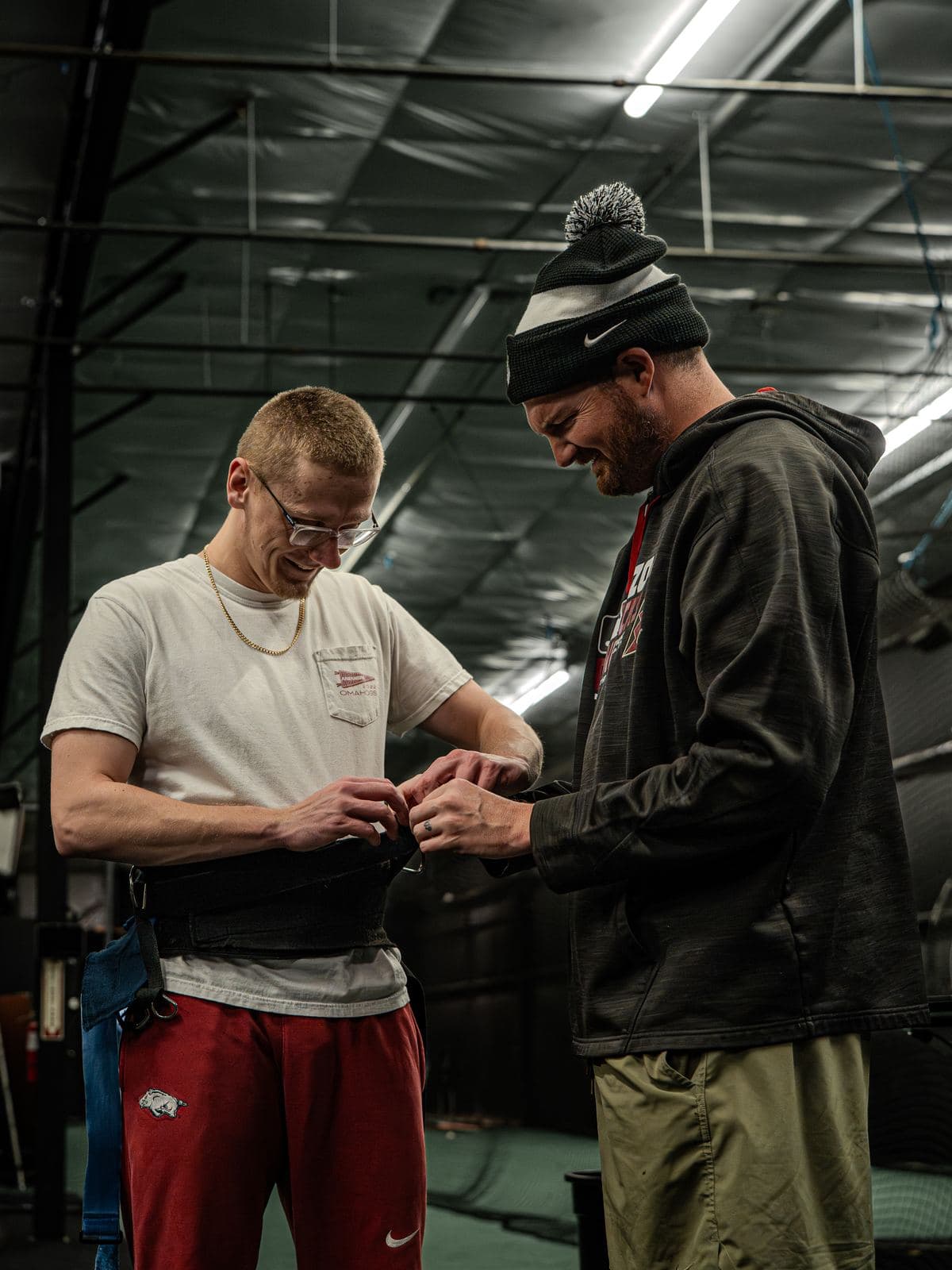
A PPL coach and a pitcher working on a grip together, hands on the ball

Pitch design

Build the pitch from what the ball is actually doing

A slider that feels sharp and a slider that actually moves are two different things, and you cannot tell them apart from the dugout. Pitch design takes the guessing out. We measure every pitch, film the release, and change one thing at a time until the ball does what it is supposed to.

3,000+Athletes trained
400+College commits
50+Pro baseball players

What it is

Shaping a pitch with data instead of feel

Every pitch leaves a fingerprint: how fast it spins, which way the spin is pointed, how much of that spin turns into movement, and where it comes out of the hand. Trackman measures all of it on every throw. A high speed camera shows what the fingers are doing at release, which is the part nobody can see live. Put those together and a grip change stops being a hunch and becomes something you can check on the very next pitch.

How we run it

One pitch, one change, measured every time

A pitch design session starts with what the pitcher already throws and what it does right now. Then we pick one goal, maybe more depth on a changeup or a breaking ball that separates from the fastball, and try one adjustment at a time: grip pressure, finger placement, seam orientation, a cue at release. If the numbers move, we film it and keep it. If they do not, we try the next thing. Your athlete leaves with the grip, the video and the numbers in the PPL app.

The arsenal

Pitches that work together, not five separate science projects

A new pitch is only useful if it makes the others better. We look at how each pitch tunnels off the fastball, whether two pitches are really the same pitch at different speeds, and which one hitters will actually chase. Sometimes the best design work is cutting a pitch, not adding one.

Who it is for

For pitchers whose delivery is already holding up

Pitch design matters most once a pitcher has a delivery that repeats and a fastball they can locate, which for most athletes is high school and up. For younger pitchers the published guidance is still fastball and changeup, and their time is better spent on how they move. If you are not sure where your athlete is, the free assessment will tell you.

Questions parents ask

Straight answers

What is pitch design in baseball?

Pitch design is using ball flight data and high speed video to shape a pitch on purpose. You measure spin, spin direction, movement and release on every throw, change one thing about the grip or release, and keep what actually makes the ball move better.

What technology does PPL use for pitch design?

Trackman measures what the ball does on every pitch, and a high speed camera films the release so we can see exactly what the fingers are doing. Both are saved in the PPL app so your athlete can look back at them between sessions.

How old should a pitcher be to start pitch design?

Most athletes are ready in high school, once their delivery repeats and they can locate a fastball. Pitch Smart still recommends fastballs and changeups only for nine to twelve year olds, so younger pitchers get more from movement and delivery work first.

Can pitch design add velocity?

Not directly. Pitch design changes how a pitch moves, not how hard it is thrown. Velocity comes from how the body moves and how the delivery transfers energy, which is the other half of what we coach.

Do college and pro pitchers do pitch design at PPL?

Yes. Our college and pro athletes use the same Trackman and high speed setup, usually in off season blocks, to sharpen a breaking ball or rebuild a changeup before they report back.

See what your pitches are really doing

The free assessment puts your athlete on Trackman and high speed video. You leave with the numbers, the film and an honest read on what we would work on first.

Book the free assessment