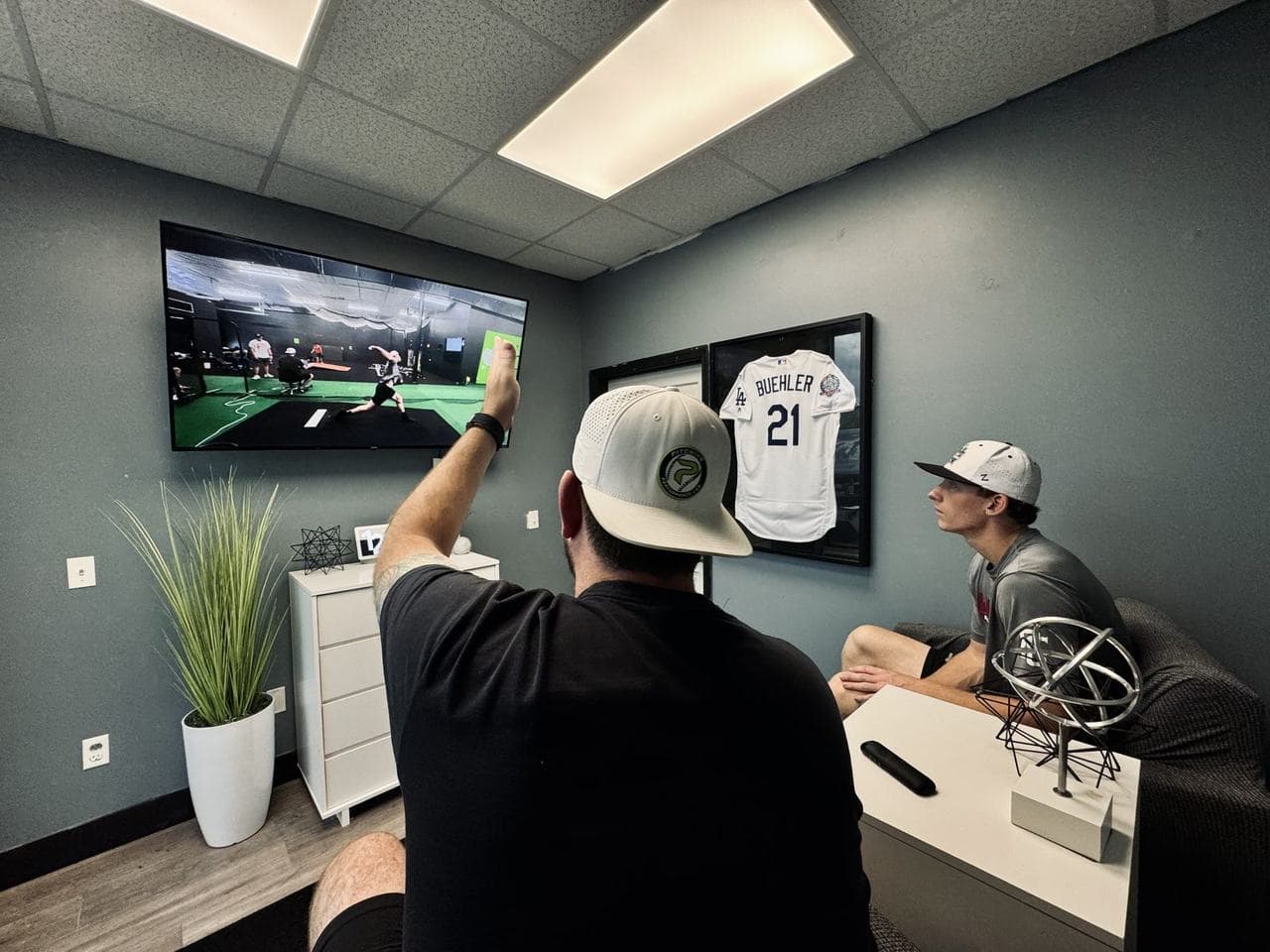
A PPL coach pointing at a delivery on the review room TV while an athlete watches

Curveballs

The curveball is probably not the problem

It is the question every parent asks and the one with the most confident wrong answers on both sides. The honest version is that the research does not blame the pitch, the published guidance still says wait, and both of those things are true at the same time.

3,000+Athletes trained
400+College commits
50+Pro baseball players

What the research says

No strong link between curveballs and elbow injuries

The American Sports Medicine Institute, who have done more of this work than anybody, say the studies have not shown a strong connection between the curveball and elbow injury. What they do find, over and over, is that the amount of competitive pitching and pitching while fatigued are strongly linked to injury. The pitch type is not the thing that moves the number.

What the guidance says

Fastball and changeup only, through twelve

Pitch Smart, published by MLB and USA Baseball, still tells nine to twelve year olds to avoid throwing anything other than fastballs and changeups. That is not a contradiction of the research. A young athlete usually does not yet have the physical maturity, the control or the coaching to throw a breaking ball with good mechanics, and a curveball thrown badly is a different object from a curveball.

The real reason to wait

There is nothing for it to do yet

An athlete who cannot locate a fastball does not need a second pitch. They need the first one to work. Kids who can spin a ball early tend to lean on it, throw fewer fastballs, and turn up at fifteen with a nice curveball and a delivery that never got built. That costs more than the elbow question does.

When it is time

Changeup first, then we will talk

The changeup is the pitch that belongs in the hands of a young athlete, and it is harder than it sounds, which is why almost nobody at that age has a real one. When an athlete can locate a fastball and hold a changeup, a breaking ball becomes a coaching decision rather than a risk. We film it and put it on Trackman, so what it is actually doing is on the screen instead of a matter of opinion.

Questions parents ask

Straight answers

At what age can a kid throw a curveball?

The published guidance says nine to twelve year olds should avoid anything other than fastballs and changeups. From thirteen it becomes a coaching decision about whether that athlete is ready, rather than a rule.

Do curveballs cause arm injuries in kids?

The research has not found a strong link. What it has found repeatedly is that how much a kid pitches, and pitching while tired, are strongly linked to injury.

My kid already throws one. Is the damage done?

Almost certainly not, and it is not the question we would start with. We would look at how much they are throwing across a year and what happens to the delivery once they get tired.

What should a young pitcher work on instead?

Locating a fastball, and a changeup. Those two cover more hitters at that age than any breaking ball, and they are what a delivery gets built on.

Send us a clip and we will tell you what we see

A PPL coach watches it and writes back a real breakdown. No membership, no card, and you can do it from your phone tonight.

Get a free video breakdown